IFTS N.º 24
- Full Professor, Laboratory of Language Processing Technologies, LLMs and Agentic AI.
- Full Professor, Digital Image Processing and Computer Vision.
Education · Culture · Technological transformation
Educator · Technology consultant · Humanist technologist
Steering technology toward human well-being and life in common requires strengthening human, institutional, and collective capacities.
Between La Plata and Mar del Plata · institutional work in Campana · nationwide reach
Profile

I am a humanist technologist, educator, and consultant in artificial intelligence and digital transformation for education and culture. My work seeks to strengthen creative forms of citizenship and steer technology toward collective well-being and the construction of livable futures.
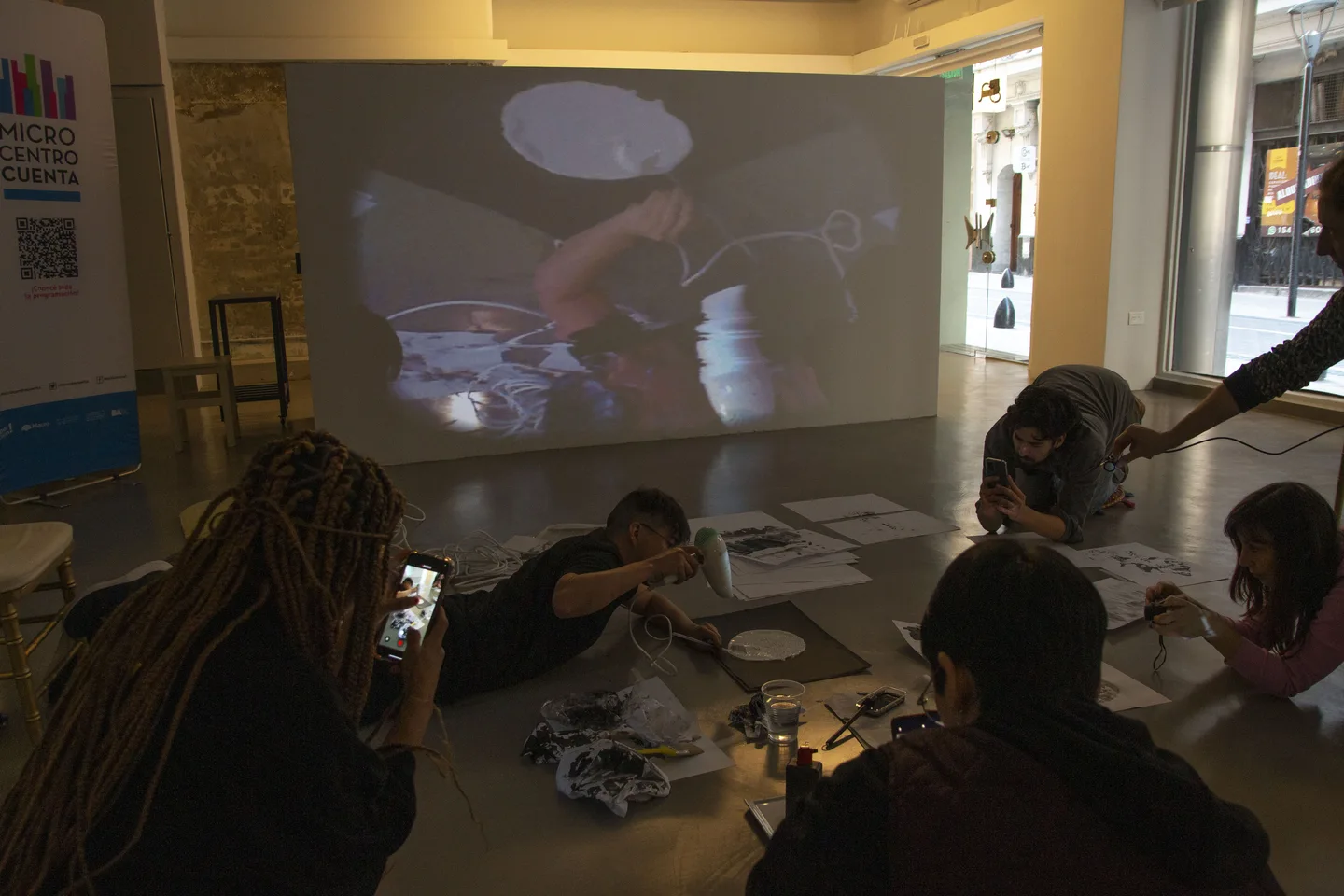
Since 2009, I have researched the relationship between technology, learning, and creation across the arts, new media, and education. My practice connects learning laboratories with open studios, where making the process public becomes part of the artwork. In both spaces, the maker approach turns the prototype into a way of thinking: learning by doing, experimenting with materials, and building knowledge with others.
I am especially interested in human–machine interaction and augmented cognition: how technologies transform and expand the ways we perceive, think, and create. Today, that trajectory also takes shape in the development of artificial intelligence systems and the design of learning experiences, programs, and strategies for educational and cultural institutions.
A practice developed across academic, cultural, and public institutions in Argentina, Spain, Germany, and Romania.
Line of work
The laboratory is the connecting thread: a way to research, create, teach, and build capacities with others, from the body and the stage to materials, code, artificial intelligence, and institutions.
2009–2016
The body, the classroom-as-laboratory, and collective creation articulate a practice grounded in experimentation, participation, and care for the conditions that enable creation.
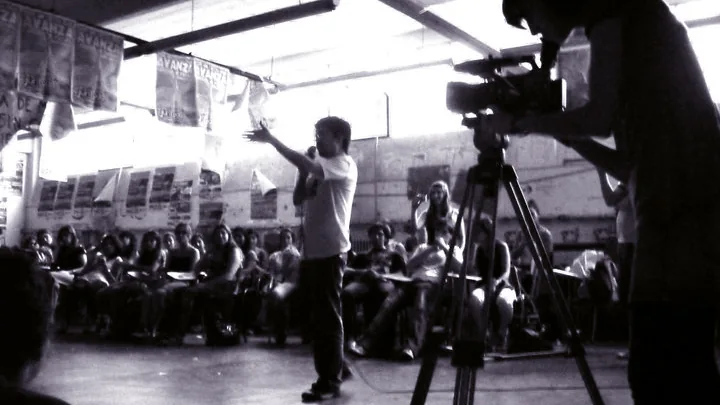
The laboratory takes shape as a method for researching, learning, and building with others: an open forum for heterogeneous actors and forms of knowledge, where bodies, relationships, environments, and technologies participate in the experience. Between 2009 and 2012, this perspective runs through Proyecto Magritte, the Laboratory of Communicational Practices and Designs, and teaching at Laboratorio Datos (UBA). Its records on the classroom-as-laboratory, distributed intelligences, extradisciplinary collaboration, and collective creation extend into «Edupunk aplicado» (2012); «On Creative Environments» (2015–2016) expands the inquiry toward the ethical and affective composition of spaces, times, and relationships.
2017–2021
Artistic practice explores light, movement, memory, and materials as agents in sensitive, interactive, and changing systems.
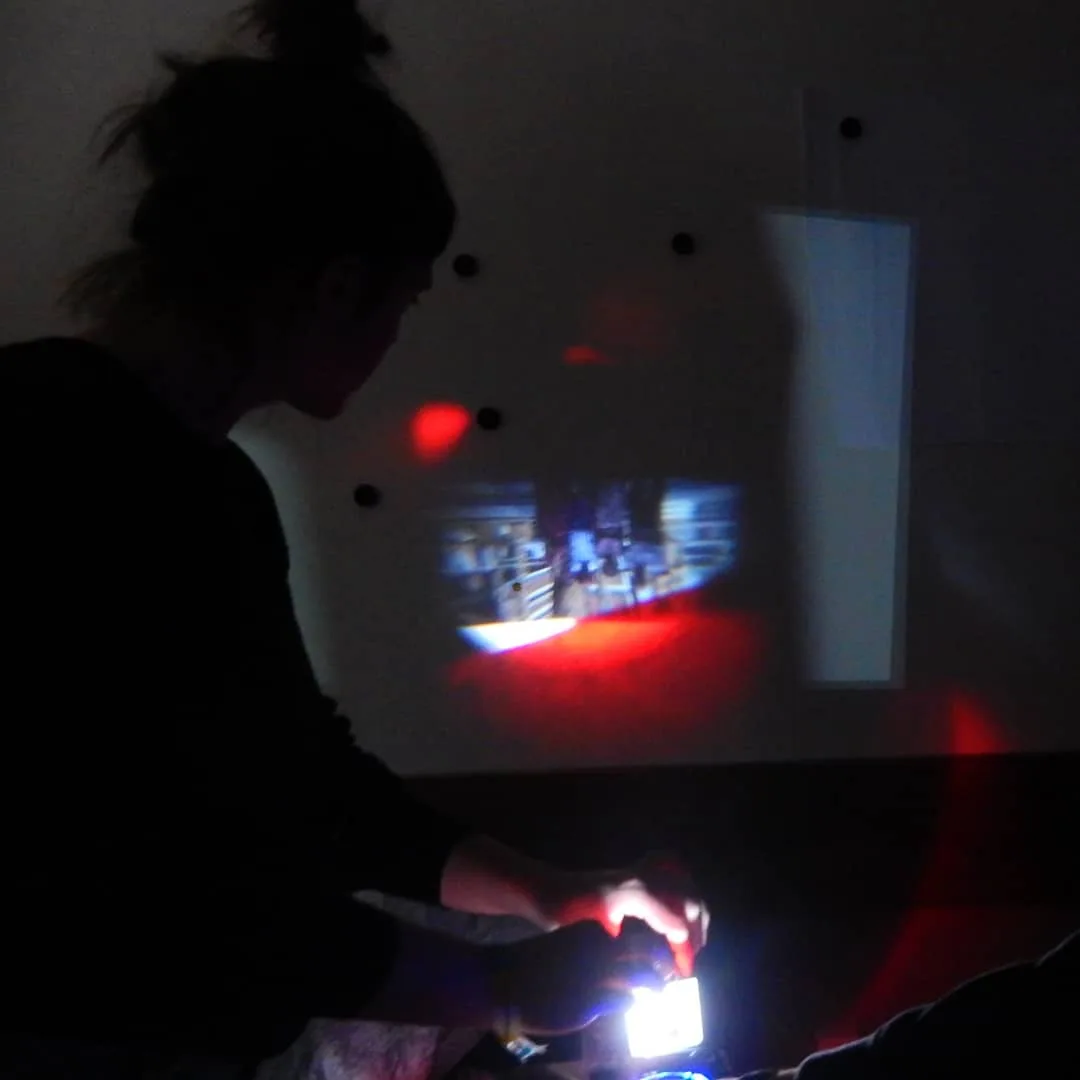
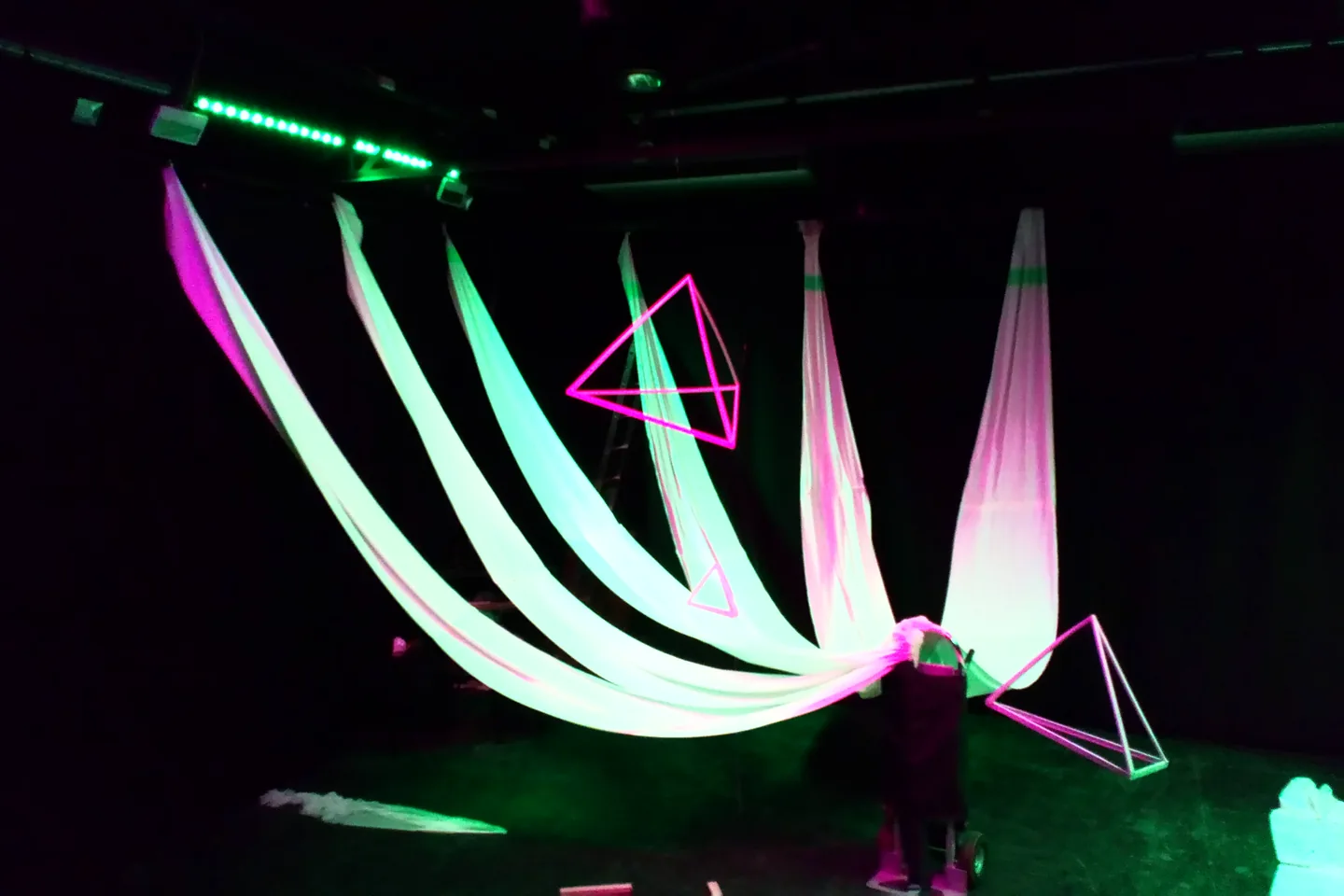
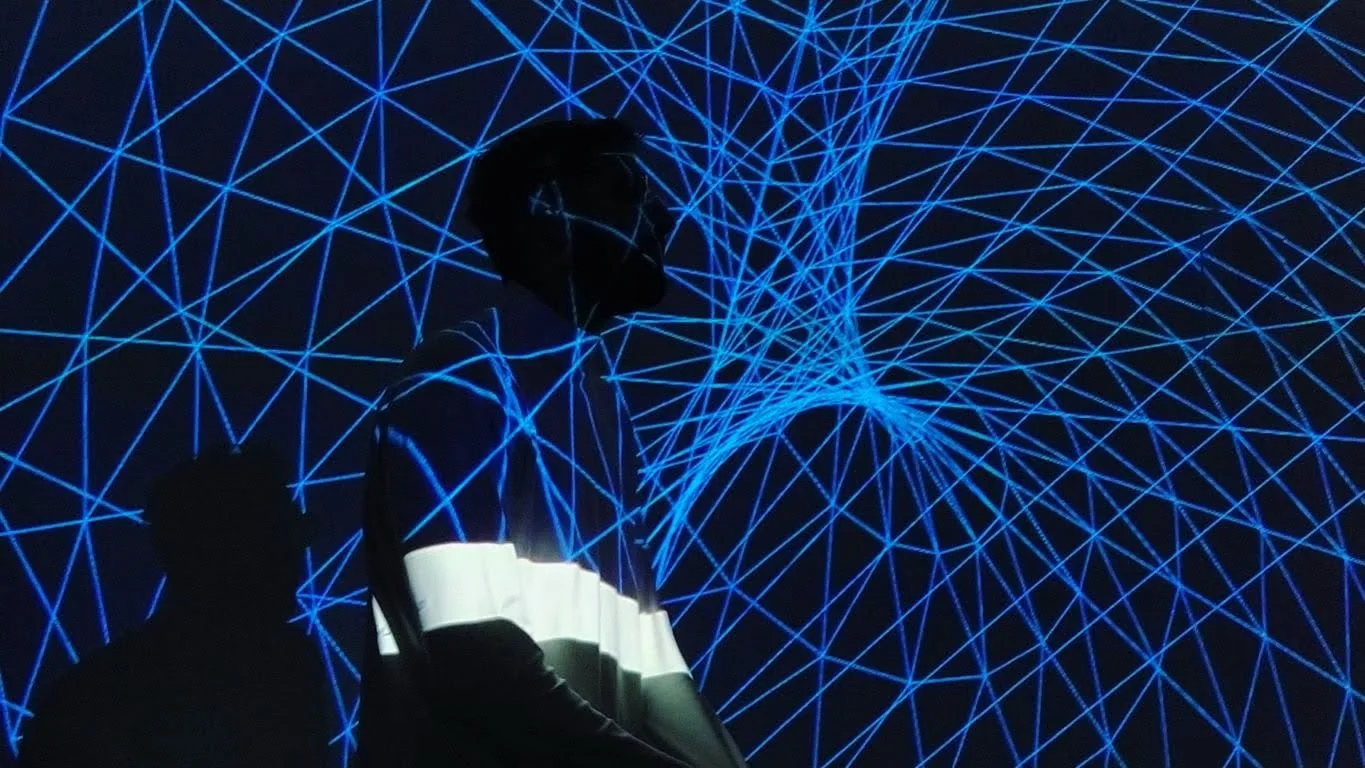
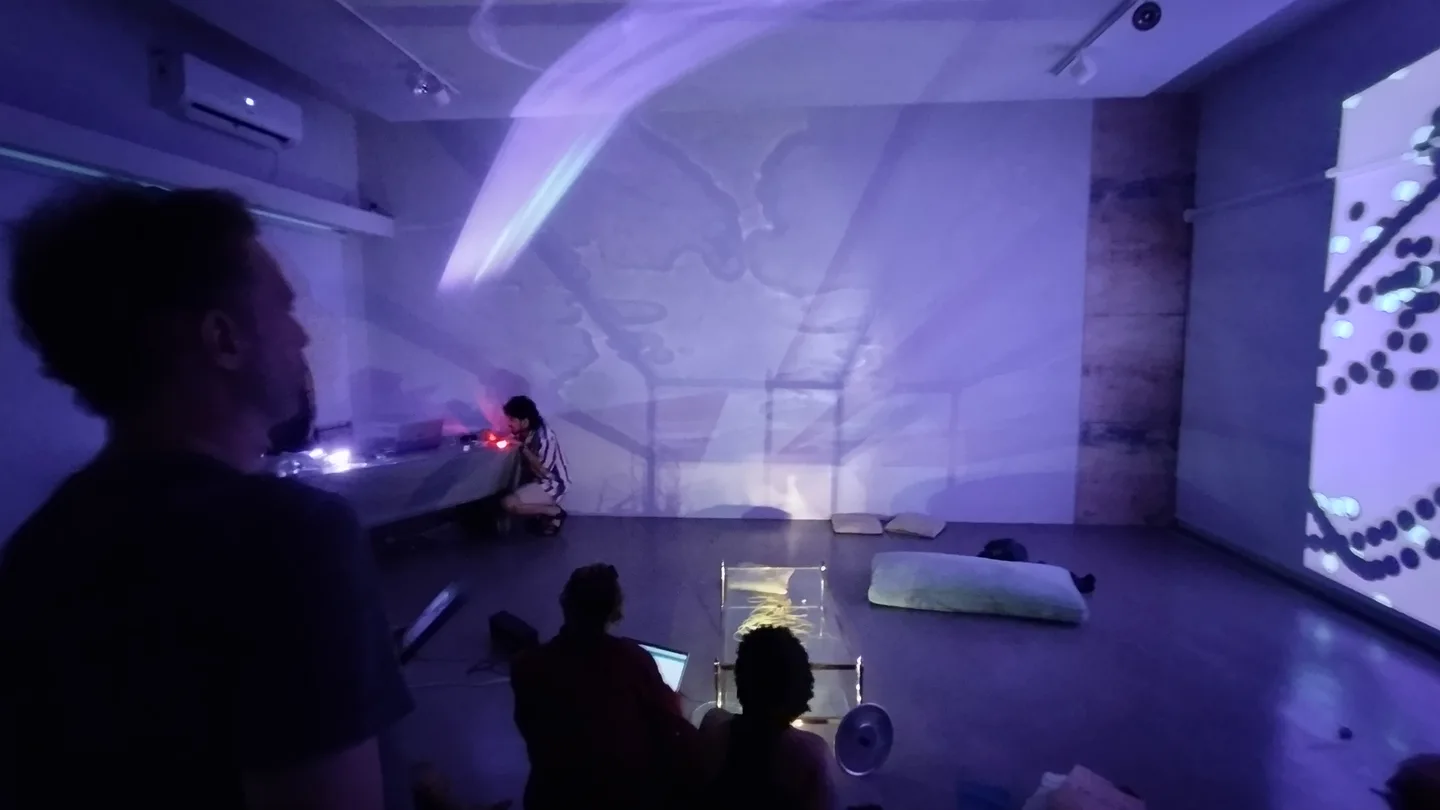
The inquiry moves toward hybrid settings that bring together code, optical devices, real-time video, glass, biomaterials, and performative practices. Matter ceases to be a passive support and becomes a partner: it carries memory, imposes rhythms, and participates in processes of morphogenesis alongside bodies and technologies. The seminar «Art in the Age of Biotechnology» (UNTREF, 2019) contributes a framework of technoscience, complex systems, and human and non-human agencies to a practice that asks how livable worlds can be co-created.
2022–2023
The research connects human–machine co-creation, generativity, and algorithmic perception with a concrete practice of code, data, and artificial intelligence.
From 2022 onward, research into generative systems, synthetic minds, planetary infrastructure, and algorithmic perception also becomes technical practice: creative coding, Python, data analysis, machine learning, and computer vision. Its digital publication is concentrated between April and August 2023 and approaches AI as an ecosystem of agencies and a cultural and educational question, rather than an isolated tool.
2023–2024
The ideas circulate through classes, programs, and laboratories across Argentina, Spain, Germany, and Romania.
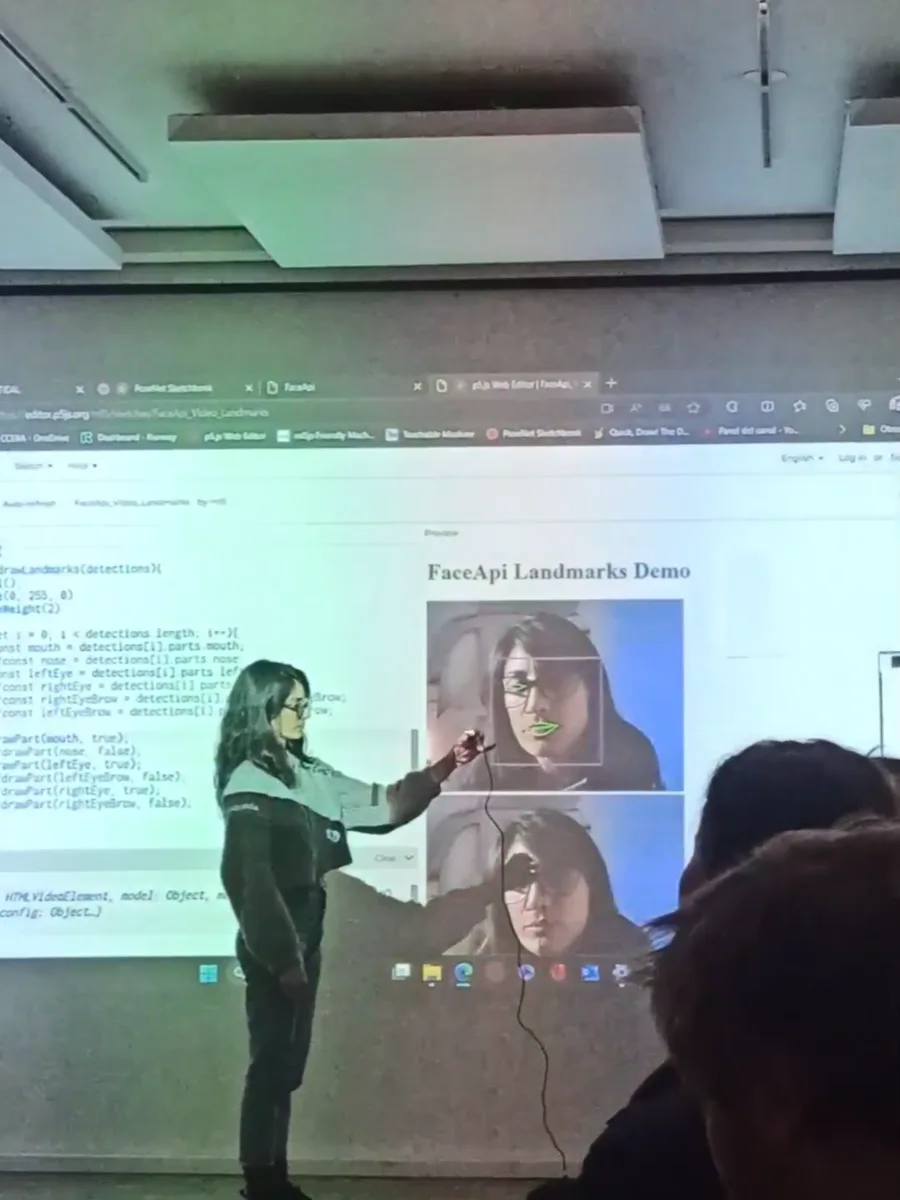
The research became classes, programs, and laboratories: a guest lecture at Universitat de Barcelona (2023), two programs at MediaLab CCEBA/AECID (2023–2024), a class on systems art in the age of generativity at the Multimedia Arts degree (UNA, Cátedra Causa), training in Alba Iulia and Cluj-Napoca endorsed by the Argentine Ministry of Foreign Affairs, work at Jugendhaus Fellbach, and the in-person creation laboratory at Nube Baja (Buenos Aires, 2024).
2024
The Computer Science orientation and Maker Space translate the research into a demanding, playful school experience.
Escuela Secundaria Martín Buber (Buenos Aires): curricular co-design, together with Carolina Quintana, of the Computer Science orientation and its Maker Space. A playful, highly demanding pathway for students aged 14 to 16 —from introductory programming and video games to embedded systems, interfaces, and experimentation with materialities— adapting content typical of the first university year and building on learning developed earlier in international contexts.
2025–present
ETI integrates the genealogy into policy, teaching laboratories, university programs, and technology education.
The genealogy translates into Integral Technology Education, teaching laboratories in language, AI, and image, university programs at UTN, digital-skills bootcamps, and advisory work on educational, cultural, and technological transformation policies. In 2025, this includes participation as a guest professor in UCES's Diploma in Responsible Artificial Intelligence.

Present
Conceptual framework
Integral Technology Education is a pedagogy of care, upbringing, and citizenship for inhabiting sociotechnical environments. It begins from the premise that technologies are neither neutral tools nor external to life: they shape attention, relationships, time, learning, and possibilities for action. Technology education means developing individual and collective capacities to understand, modulate, create, limit, and govern these environments.
Digital well-being is a horizon for care, empathy, upbringing, and life in common. This dimension provides criteria for evaluating rhythms, relationships, decisions, and infrastructures, engaging individuals, organizations, and public policy alike.
Understanding how systems work in order to avoid dependence on opaque explanations or purely instrumental use.
Evaluating evidence, models, sources, uncertainty, and the limits of technologically produced knowledge.
Moving from consumption toward the capacity to imagine, prototype, and build technologies with cultural and social meaning.
Recognizing that contemporary life unfolds across environments where physical and digital dimensions are intertwined. It means understanding how these systems distribute capacities, rights, responsibilities, and power, and participating in steering them toward collective well-being and democratic life.
Building independent capacities to decide which technologies to adopt, adapt, reject, or develop collectively.
Its purpose is for people, communities, and institutions to become more than technology users: actors capable of making informed decisions, building their own capacities, and steering innovation toward public, democratic, and socially meaningful ends.
The extended framework —nine operative concepts, principles, practices, and indicators— is published in Spanish.
Learning environments
Public teaching repositories and intensive learning experiences that extend education beyond the classroom.
Understanding, experimentation, and construction of assistants and prototypes.
From idea to MVP through LLMs, interface design, and rapid prototyping.
AI-assisted web development and deployment, focused on context and design judgment.
Adoption strategies, assistants, and process automation.
From raw data to visual stories for decision-making.
Programming logic through small, clear, and useful scripts.
Workflows, APIs, webhooks, and process integration.
Research, early validation, wireframes, and user testing.
Physical computing, sensors, tangible interaction, and play.
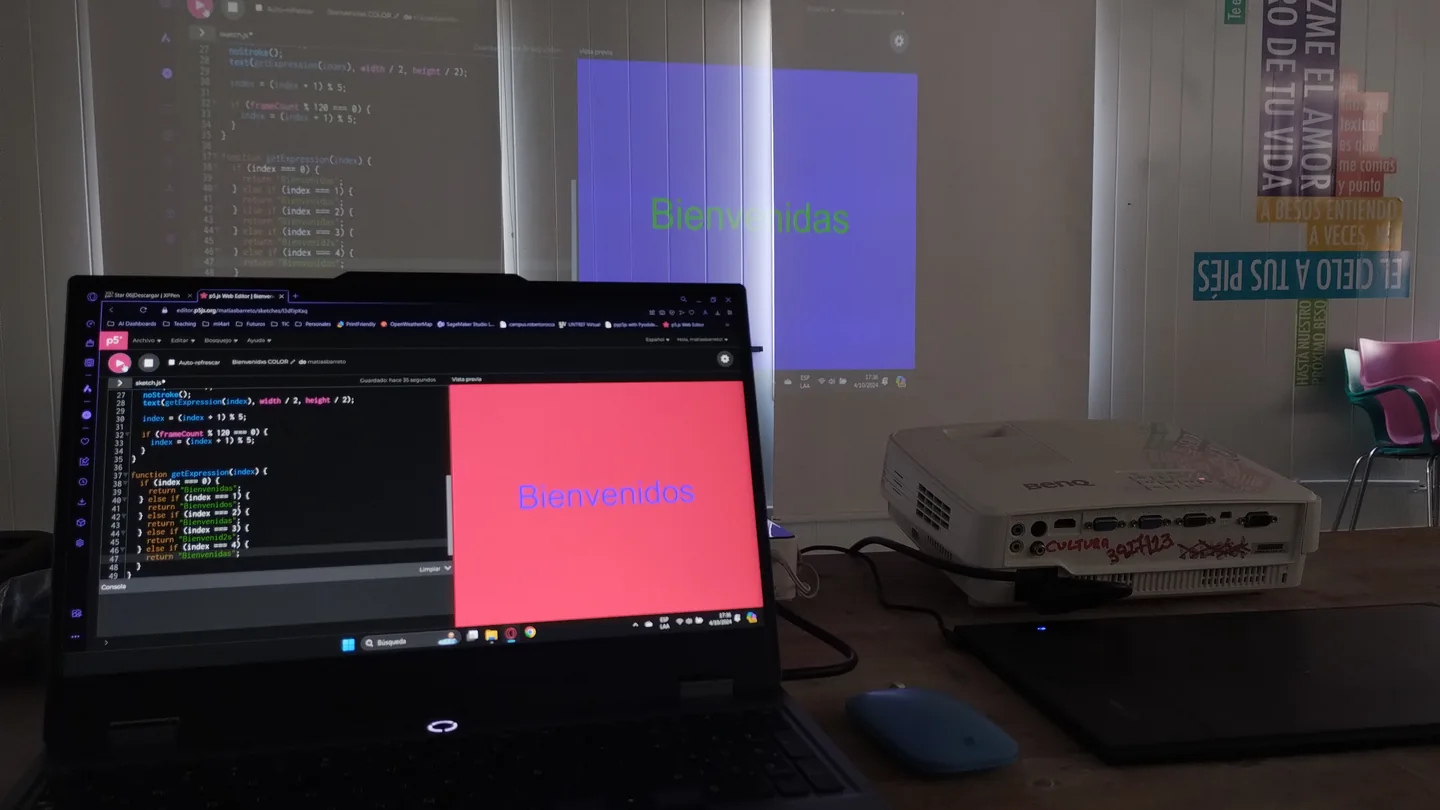
Code as an expressive medium for images, installations, and generative systems.
Pedagogical work
A selection of learning pathways involving artificial intelligence, programming, design, and creative technologies across different educational contexts.
UTN Facultad Regional Rosario · University Extension · 2026
A 33-hour professional course on developing solutions with Python and artificial intelligence: automation, APIs, data analysis, computer vision, LLMs, RAG, agents, and deployment.
International cultural cooperation · Argentina–Romania · 2023
A pioneering learning experience in artificial intelligence and creative practices, developed in Buenos Aires and delivered in Alba Iulia and Cluj-Napoca, with the formal endorsement of the Argentine Ministry of Foreign Affairs.
Escuela Secundaria Martín Buber · Buenos Aires · 2024
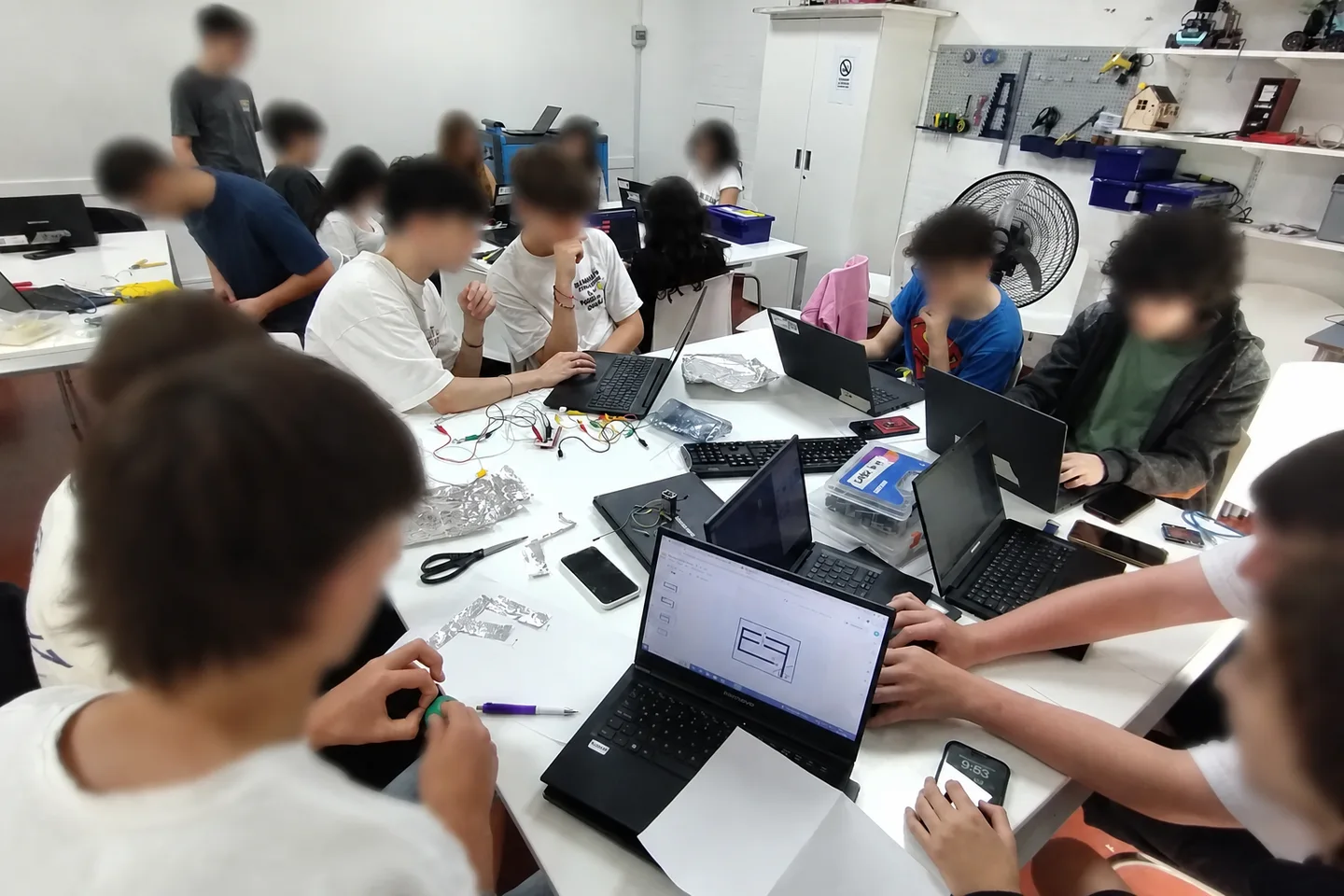
Curricular and Maker Space co-design, together with Carolina Quintana: a playful, highly demanding pathway for students aged 14 to 16, from programming and video games to embedded systems and interfaces.
Multi-institutional trajectory
A learning and creative track using p5.js, Processing, WebGL, and artificial intelligence, developed at UTN Facultad Regional General Pacheco, CCEBA, Consejo Provincial de Teatro Independiente (CPTI), Jugendhaus Fellbach, Nube Baja, and Campana Joven. «Applied AI Tools 1» is also part of this track: a 35-hour course taught at UTN Facultad Regional Delta in 2024, focused on creating and prototyping digital experiences that integrated web development, image, sound, and text.
Student access
Recent activities and student materials are indexed in Spanish.
Collaboration
Two complementary lines of work to strengthen capacities, guide decisions, and build technological environments in service of human well-being and life in common.